Jizhou
The Romance of the Three KingdomsJizhou is the northern territory at the center of Yuan Shao’s rise and the collapse of his family’s power. First acquired through a calculated political maneuver, it becomes a base for military conflict and, after Yuan Shao’s death, the prize in a divided succession. Its eventual capture by Cao Cao ends the Yuans’ rule in the north and prepares the next stage of Cao Cao’s expansion.
Seizure and Political Geography
Yuan Shao gains Jizhou by turning a proposed alliance into a takeover. He suggests to Gongsun Zan that they attack the province together, then warns its governor, Han Fu, that Gongsun Zan threatens him. Yuan Shao offers to help defend Jizhou, and, although some of Han Fu’s advisers recognize the danger, Han Fu accepts the offer. Yuan Shao arrives with his army and takes control. Two advisers attempt to assassinate him but are killed by his guards; Han Fu receives an impressive yet powerless title and is pushed aside, eventually taking refuge in Chenliu.
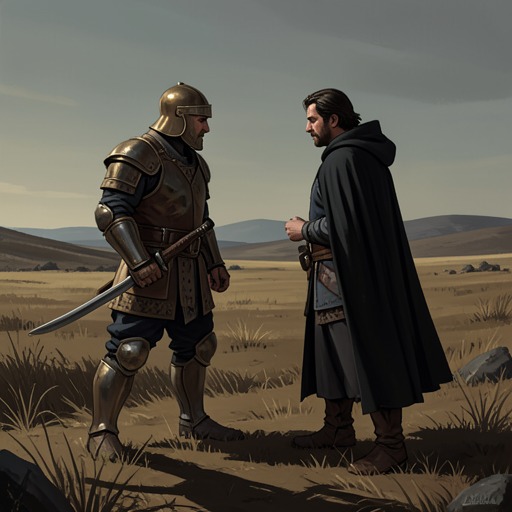
The takeover makes Jizhou a point of direct conflict between Yuan Shao and Gongsun Zan. Gongsun Zan confronts Yuan Shao at a bridge over the River Pan, accusing him of treachery. Yuan Shao replies that Han Fu surrendered because he was Yuan Shao’s superior. The dispute over who has the right to rule Jizhou thus becomes a military contest: Gongsun Zan’s cavalry faces Yuan Shao’s archers and infantry, while the bridge and its approaches shape the battle. After Gongsun Zan’s forces are driven back, Zhao Zilong twice intervenes to protect him, and Xuande, Zhang Fei, and Guan Yu arrive with their men to turn the fighting against Yuan Shao. The encounter establishes Jizhou as more than a prize claimed through political maneuver: control of it draws rival armies into repeated struggles over access and authority.
Yuan Shao’s Base and the Northern War
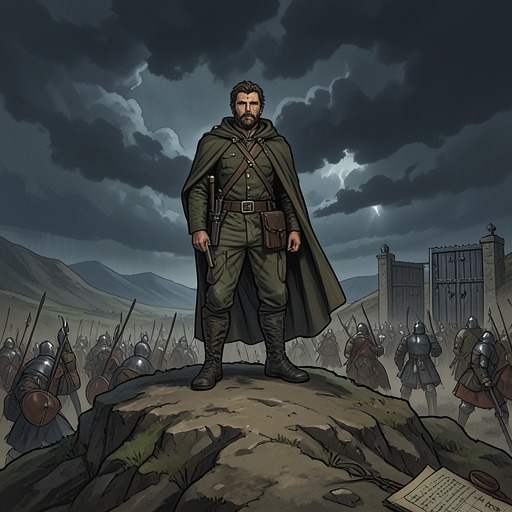
Jizhou remains Yuan Shao’s power base as he contests the north. After his defeat by Cao Cao, Yuan Shao escapes with his shattered forces and regroups for the march home to Jizhou. On the journey he hears his soldiers mourning the relatives and comrades lost in battle. Their grief troubles him even after he reaches safety, although the arrival of reinforcements from across his domain soon restores his confidence.
The province’s position also matters in the succession crisis that follows Yuan Shao’s death. His widow installs their son Yuan Shang as ruler, while Yuan Tan, the elder son, becomes his principal rival. Yuan Shang gives Yuan Tan only a small force when he asks for reinforcements against Cao Cao, apparently expecting Cao Cao to eliminate him. Yuan Tan’s resentment at being passed over makes him receptive to Cao Cao’s proposal of cooperation. The brothers’ conflict turns the territory into a contested political center: alliances shift, armies move, and the struggle for the north repeatedly returns to the gates of Jizhou.
Cao Cao’s Capture and Its Consequences
Cao Cao exploits the Yuan brothers’ division, but the contest is not settled immediately. In the early months of 203, he attacks Jizhou and fails to take it, then withdraws. Later, after Cao Cao and Yuan Tan form a temporary alliance, Cao Cao advances as Yuan Shang withdraws from the siege of Pingyuan. Cao Cao and Yuan Tan also plot against one another, while the wider struggle between Cao Cao and Yuan Shang continues through changing fortunes, falling cities, and defeated armies.
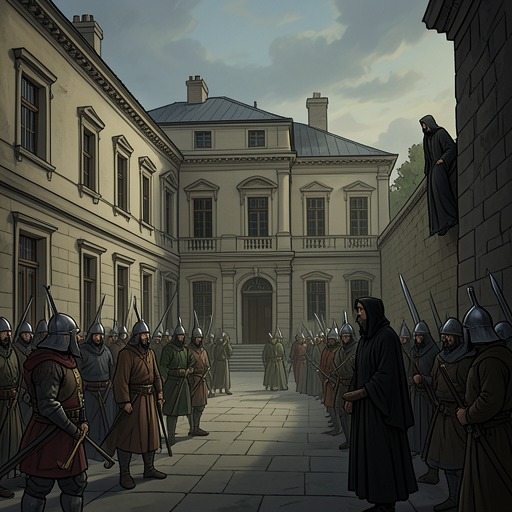
When Cao Cao again reaches Jizhou’s closed gates, he uses the River Zhang to flood the city. He orders that members of the Yuan clan are not to be harmed. The city falls, ending Yuan rule in the north. Cao Cao’s capture of Jizhou is therefore the culmination of two linked vulnerabilities: the family’s internal fracture and the strategic pressure of an advancing rival. With the northern territory conquered, Cao Cao can begin planning an assault on the south.
A Strategic and Narrative Turning Point
Jizhou’s narrative importance lies in the way territorial control joins political legitimacy, military position, and family succession. Yuan Shao takes the province by presenting himself as a protector; his opponents then challenge both the fairness of that acquisition and his authority to hold it. Later, the Yuan sons’ struggle weakens the same family that had made Jizhou the foundation of its power. Cao Cao’s eventual victory converts that weakness into a decisive territorial gain.
The province also marks a change in the scale of the story. Its capture concludes Cao Cao’s campaign against the Yuans and shifts his attention from the northern rivals to the south. In a later scene, standing on Jizhou’s wall with Xun You, Cao Cao sees a golden light shining from the ground and orders the spot excavated because Xun You takes it to indicate buried treasure. The image places an omen-like discovery within the newly conquered territory, but Jizhou’s decisive significance remains political and strategic: it is the base Yuan Shao gained through intrigue, the ground divided by his sons, and the northern stronghold whose fall frees Cao Cao to pursue further conquest.